
The creep test (or viscous flow test) evaluates the permanent deformation of a material over time when subjected to a constant load at high temperatures. It measures long-term strength to predict structural failure in components such as turbines and engines, which often operate for more than 10,000 hours. These tests are used to evaluate the resistance of metals and special alloys to prolonged deformation under static load and at high temperatures, ensuring safety in turbines, engines, and forged components.
Constant tensile/compressive load and constant high temperature.
To measure the creep rate (deformation/time) and the time to failure.
Metals, alloys, plastics, and concrete.
Cleaning the test specimen and measuring its dimensions.
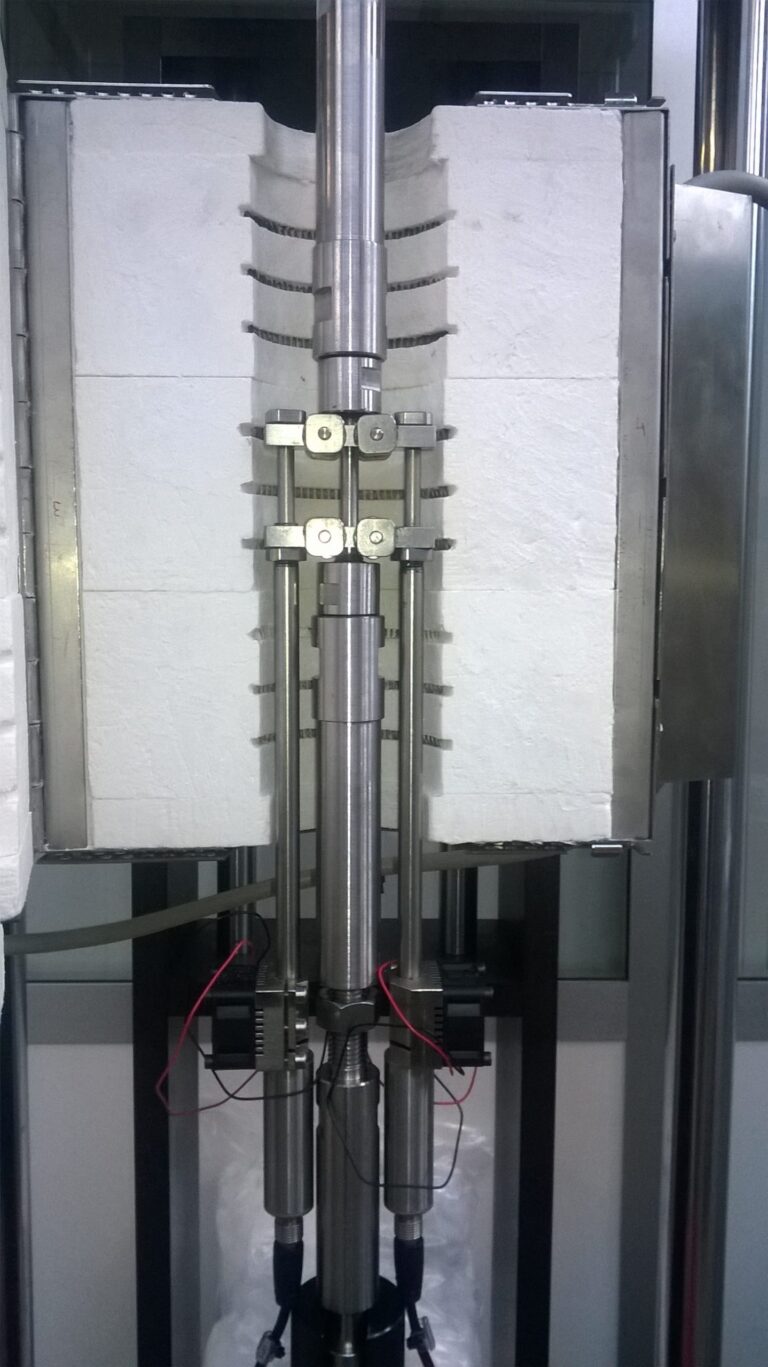
Installation in the testing machine and application of thermocouples for temperature control.
The load is applied smoothly, without sudden impacts.
A dedicated transducer records strain over time.
Creep tests (viscous flow) are essential in high-performance industrial sectors, such as aerospace, energy, oil and gas, nuclear, and automotive.
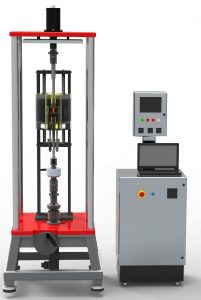
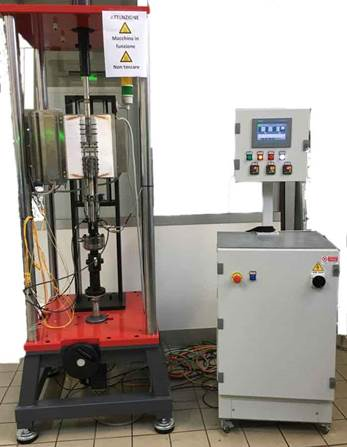
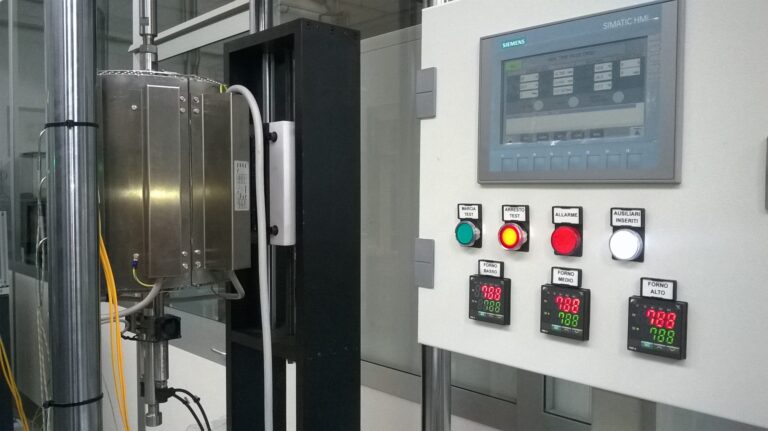
Uniaxial mechanical testing machine for tensile, creep and stress relaxation testing of metallic materials.
The machine features a high-stiffness four-column frame with vibration-isolated supports and an actuator mounted on the lower crosshead for servo-controlled load application. TECHNICAL SPECIFICATIONS

Holding Company

Sister Company
©2026 ITALSIGMA S.r.l. Via Masetti, 50 – 47122 Forlì (FC) ITALY
P.IVA IT01763520408 | C.F. 01763520408 | Privacy&Cookie Policy | Credits: Wizard srl